July 1805
Anna Pavlovna's Political Salon
[Anna Pavlovna Scherer](entity:character-recall-character-anna-pavlovna-scher-ece2ba8932d5) receives Petersburg society while directing conversation against Napoleon and Austria. [Prince Vasili Kuragin](entity:character-recall-character-prince-vasili-kurag-d710046a3d34) quietly seeks influence for his son, while the gathering reveals a world where political conviction and social maneuvering are inseparable.
July 1805
Pierre Enters Society
[Pierre Bezukhov](entity:character-recall-character-pierre-bezukhov-c5f31d9c4b4a) appears at Anna Pavlovna's reception as an awkward but candid outsider. His defense of Napoleon and the Revolution unsettles the salon, while [Prince Andrei Bolkonsky](entity:character-recall-character-prince-andrei-bolko-ed1d0bab5551) recognizes him as one of the few genuinely living people in their circle.
Summer 1805
The Rostov Name Day
The Rostov household celebrates the name day of [Countess Natalya Rostova](entity:character-recall-character-countess-natalya-ro-200760ff4f60) and [Natasha Rostova](entity:character-recall-character-natasha-rostova-881ee187c6a6) amid guests, gossip, music, and lavish hospitality. The younger generation—[Nikolai Rostov](entity:character-recall-character-nikolai-rostov-951d69c879e8), [Sonya Rostova](entity:character-recall-character-sonya-rostova-d2e20cb74470), [Boris Drubetskoy](entity:character-recall-character-boris-drubetskoy-96bc9999538a), and Natasha—introduces the novel's intimate family world.
Summer 1805
Natasha and Boris Promise
[Natasha Rostova](entity:character-recall-character-natasha-rostova-881ee187c6a6) kisses [Boris Drubetskoy](entity:character-recall-character-boris-drubetskoy-96bc9999538a) and secures a childish promise that they will marry when she is older. The scene captures the intensity and innocence of youthful feeling before the historical crisis overtakes their lives.
Summer 1805
Count Bezukhov's Death
[Count Peter Kirilovich Bezukhov](entity:character-recall-character-count-peter-kirilov-1f27a8558523) dies after a prolonged illness while his relatives struggle over his will and inheritance. Pierre becomes the legitimate Count Bezukhov and inherits the fortune, abruptly transforming his social position and making him the object of universal attention.
Summer 1805
Prince Andrei Rejects Society
[Prince Andrei Bolkonsky](entity:character-recall-character-prince-andrei-bolko-ed1d0bab5551) tells Pierre that marriage and drawing-room life have imprisoned him, and he leaves for the army. His disillusionment with domestic and social existence becomes the starting point of his search for glory and meaning.
Winter 1805-06
Pierre Marries Helene
Under [Prince Vasili Kuragin](entity:character-recall-character-prince-vasili-kurag-d710046a3d34)'s pressure and Petersburg society's expectations, Pierre marries [Helene Kuragina](entity:character-recall-character-helene-kuragina-0d4aafd47cfd). The marriage is founded on attraction, social coercion, and self-deception, setting Pierre on a path toward humiliation and moral crisis.
November 1805
Anatole Visits Bald Hills
[Prince Vasili Kuragin](entity:character-recall-character-prince-vasili-kurag-d710046a3d34) brings [Anatole Kuragin](entity:character-recall-character-anatole-kuragin-5164acd82e9f) to [Bald Hills](entity:location-recall-location-bald-hills-247d43316827) to seek [Princess Marya Bolkonskaya](entity:character-recall-character-princess-marya-bolk-a32743cdd972)'s hand. Anatole's beauty and careless charm excite the women around him, while his attraction to [Mademoiselle Bourienne](entity:character-recall-character-mademoiselle-bourie-818b4ca821ab) exposes his lack of honor.
November 1805
Mary Rejects Anatole
[Princess Marya Bolkonskaya](entity:character-recall-character-princess-marya-bolk-a32743cdd972) discovers [Anatole Kuragin](entity:character-recall-character-anatole-kuragin-5164acd82e9f) embracing [Mademoiselle Bourienne](entity:character-recall-character-mademoiselle-bourie-818b4ca821ab) and refuses his proposal. Her decision confirms her moral independence and reveals the contrast between her self-sacrificing spirituality and Anatole's predatory frivolity.
October 1805
Russian Army Reaches Braunau
The [Russian Imperial Army](entity:organization-recall-organization-russian-imperial-e820bc5286a6) arrives exhausted at [Braunau](entity:location-recall-location-braunau-8001f3241c3b) for inspection by [Mikhail Kutuzov](entity:character-recall-character-mikhail-kutuzov-d03423c880fd). The regiment is clean and disciplined but its soldiers' boots are ruined, exposing the gap between military display and the material reality of campaigning.
October 1805
Dolokhov Seeks Redemption
[Fyodor Dolokhov](entity:character-recall-character-fyodor-dolokhov-18e4db8eb785), reduced to the ranks, insists that he will prove his devotion through service. His defiance and courage foreshadow both his later military distinction and his dangerous habit of converting honor into personal combat.
November 1805
Battle of Schöngrabern
At Schöngrabern, Russian troops delay the French advance long enough to save the retreating army. [Captain Tushin](entity:character-recall-character-captain-tushin-54711f7accfb)'s unsupported battery sets the village on fire and holds off superior forces, while [Prince Pyotr Bagration](entity:character-recall-character-prince-pyotr-bagrat-a1e13864a1c7)'s presence steadies the troops.
November 1805
Rostov Faces Combat
[Nikolai Rostov](entity:character-recall-character-nikolai-rostov-951d69c879e8) experiences battle first at the Enns crossing and then at Schöngrabern. He discovers that combat is not the clean heroic spectacle he imagined but a realm of terror, confusion, and the desperate instinct to survive.
Late 1805
Prince Andrei Seeks Glory
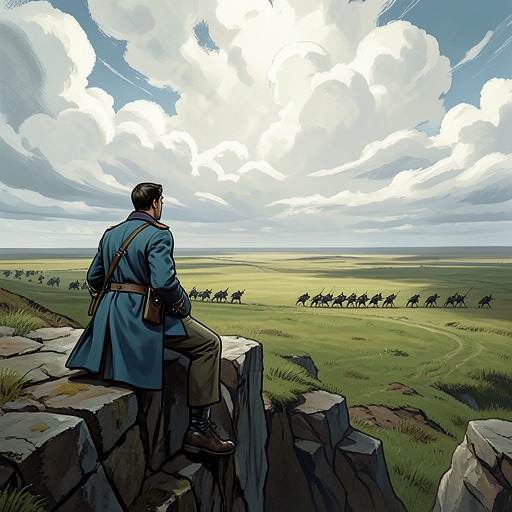
Prince Andrei returns to the army convinced that war will provide his decisive moment of fame. He imagines a personal triumph that will lift him above ordinary men, unaware that the battlefield will instead dismantle his faith in glory.
November-December 1805
Austerlitz Campaign Begins
Russian and Austrian leaders decide to advance against Napoleon despite conflicting counsel and inadequate knowledge of the French position. Court enthusiasm, military vanity, and elaborate plans replace sober judgment.
2 December 1805
Battle of Austerlitz
The allied army is defeated at [Austerlitz](entity:location-recall-location-austerlitz-6d81ebb860a8) after its commanders abandon caution and execute a confused plan. Prince Andrei seizes a fallen standard and leads an attack, but is wounded and discovers the infinite sky that makes human glory appear trivial.
After Austerlitz
Napoleon Recognizes Andrei
Napoleon encounters the wounded Prince Andrei on the battlefield and praises his death. Andrei, however, no longer regards Napoleon or martial greatness as important beside the vast, peaceful sky and the mystery of life and death.
March 1806
Prince Lise Dies in Childbirth
Prince Andrei returns to [Bald Hills](entity:location-recall-location-bald-hills-247d43316827) just in time for [Princess Lise Bolkonskaya](entity:character-recall-character-princess-lise-bolko-fe16be2b62db)'s labor. She dies after giving birth to Nicholas, leaving Andrei with guilt, grief, and a sense that life has condemned him for failing her.
Winter 1806
Pierre's Duel with Dolokhov
Tormented by rumors of Helene's affair with [Fyodor Dolokhov](entity:character-recall-character-fyodor-dolokhov-18e4db8eb785), Pierre challenges him to a duel. Pierre wounds Dolokhov while Dolokhov misses, and the encounter destroys Pierre's marriage and his belief in his former way of life.
1806-07
Pierre Joins Freemasonry
At a post station Pierre meets [Joseph Alexeevich Bazdeev](entity:character-recall-character-joseph-alexeevich-b-b986b18eff50), whose spiritual teaching persuades him that moral renewal requires self-knowledge and disciplined virtue. Pierre enters the Freemasons and imagines that he has found a path to personal and social regeneration.
1807-08
Pierre Reforms His Estates
Pierre attempts to improve the lives of his serfs by reducing labor, creating schools and hospitals, and planning emancipation. His stewards manipulate the reforms, revealing Pierre's generous intentions and his inability to master practical administration.
June 1807
Battle of Friedland
The Russian army is defeated at Friedland, and the disaster leads to negotiations between Alexander I and [Napoleon Bonaparte](entity:character-recall-character-napoleon-bonaparte-a7bc025f2cba). The defeat shifts the political relationship between the two emperors and prepares the settlement at [Tilsit](entity:location-recall-location-tilsit-4eb057270e4c).
July 1807
Treaties of Tilsit
Alexander I and Napoleon meet at [Tilsit](entity:location-recall-location-tilsit-4eb057270e4c) and conclude peace, transforming their former hostility into a public alliance. Nicholas Rostov, witnessing the ceremony, struggles to reconcile his devotion to the Russian emperor with the sudden friendship shown toward France.
Spring-Summer 1809
Prince Andrei Returns to Life
After years of seclusion, Prince Andrei sees an old oak transformed by summer and suddenly rejects his belief that life is over. The encounter awakens his desire for public work, happiness, and love.
May 1809
Andrei Meets Natasha Again
At [Otradnoe](entity:location-recall-location-otradnoe-b0eb627b7d62), Prince Andrei notices [Natasha Rostova](entity:character-recall-character-natasha-rostova-881ee187c6a6)'s vitality and hears her celebrate the moonlit night. Her unforced joy unsettles his former detachment and begins the emotional renewal that will lead him back into love.
1809
Speransky's Reform Circle
In [Saint Petersburg](entity:location-recall-location-saint-petersburg-30abed414d45), Prince Andrei becomes involved with [Mikhail Speransky](entity:character-recall-character-mikhail-speransky-5935f2adb793)'s legal and administrative reforms. He admires Speransky's rational brilliance until a dinner reveals the cold vanity and artificial wit beneath the reformer's public idealism.
New Year's Eve 1809-10
Natasha's First Grand Ball
Natasha attends her first grand Petersburg ball and feels abandoned until Prince Andrei asks her to dance. Her grace and spontaneous happiness revive him, and the evening confirms their mutual attraction.
Early 1810
Andrei Proposes to Natasha
Prince Andrei asks [Count Ilya Rostov](entity:character-recall-character-count-ilya-rostov-55026c3c72b9) for Natasha's hand and receives the family's consent. Because [Prince Nikolai Bolkonsky](entity:character-recall-character-prince-nikolai-bolk-821c3ee695d0) demands a year's delay, the couple becomes secretly engaged, binding their hopes to a difficult separation.
1810
Andrei Leaves for the West
Prince Andrei leaves Russia to follow medical advice and to allow the required year before marriage to pass. Natasha initially collapses into despair but soon returns to her outward gaiety, while the separation creates a dangerous emotional vulnerability.
Winter 1811-12
Anatole Courts Natasha
At the opera and at Helene's gatherings, [Anatole Kuragin](entity:character-recall-character-anatole-kuragin-5164acd82e9f) pursues Natasha with confident intimacy despite his existing secret marriage. Natasha, emotionally unmoored and intoxicated by society, begins to believe that she loves him.
February 1812
Anatole's Attempted Elopement
Dolokhov and Anatole arrange to abduct Natasha, carry her to a false wedding, and flee abroad. Marya Dmitrievna intercepts the plan, locks Natasha in her room, and prevents a scandal that would have destroyed several families.
February 1812
Pierre Confronts Anatole
Pierre discovers that Anatole is already married and forces him to leave [Moscow](entity:location-recall-location-moscow-b59c72aac896). He demands Natasha's letters and orders Anatole never to speak of the affair, protecting Natasha's reputation while recognizing the depth of her despair.
Spring-Summer 1812
Natasha's Spiritual Recovery
After attempting suicide with arsenic, Natasha undergoes a long illness and turns toward repentance and religious observance. During the [Peter's Fast](entity:time-recall-time-peter-s-fast-fe9522af612f) and the [Nativity of the Theotokos](entity:time-recall-time-nativity-of-the-theotoko-b7dcb9d6f810), prayer gives her a new sense of humility and the possibility of a clean life.
June 1812
French Invasion Begins
[Napoleon Bonaparte](entity:character-recall-character-napoleon-bonaparte-a7bc025f2cba)'s forces cross the [Niemen River](entity:location-recall-location-niemen-river-340713c8eb24) and begin the invasion of Russia. Alexander I rejects negotiations, while the Russian armies retreat amid competing plans, court factions, and uncertainty.
June-August 1812
Russian Retreat Continues
The Russian armies withdraw through the western provinces, abandoning [Vilna](entity:location-recall-location-vilna-fb55f1eecab0) and Vitebsk and eventually concentrating near [Smolensk](entity:location-recall-location-smolensk-cc4ae16d49c9). The retreat enrages the army and population but gradually produces the unity, endurance, and patriotic spirit needed for the national struggle.
July 1812
Battle of Saltanovka
Raevsky's defense at Saltanovka is celebrated as a heroic stand, though the soldiers' actual experience is less theatrical than patriotic legend. The episode illustrates the gap between military reality and the stories later told about it.
July 1812
Battle of Ostrovna
[Nikolai Rostov](entity:character-recall-character-nikolai-rostov-951d69c879e8) leads a cavalry charge at Ostrovna and wounds a French officer before taking him prisoner. The praise and proposed decoration disturb Rostov because the defeated officer's ordinary human face makes the supposed glory of killing seem morally obscure.
August 1812
Smolensk Burns
The Russian army abandons [Smolensk](entity:location-recall-location-smolensk-cc4ae16d49c9) after a fierce battle, and the town's inhabitants set fire to what they cannot carry away. Prince Andrei's family is forced from [Bald Hills](entity:location-recall-location-bald-hills-247d43316827), while the destruction intensifies Russian hatred and transforms the war into a national struggle.
August 1812
Kutuzov Takes Command
Popular pressure leads Alexander I to appoint [Mikhail Kutuzov](entity:character-recall-character-mikhail-kutuzov-d03423c880fd) commander in chief. His authority replaces the divided command structure and aligns the army with the people's instinct that Russia must endure rather than seek a neat strategic victory.
24 August 1812
Battle of Shevardino Redoubt
Napoleon's forces capture the [Shevardino Redoubt](entity:location-recall-location-shevardino-redoubt-5bb8aa2e1d1b), forcing the Russians to shift and hastily fortify their left flank. The unexpected loss determines the battlefield on which [Borodino](entity:location-recall-location-borodino-dd8721e472bb) will be fought.
25 August 1812
Pierre Arrives at Borodino
Pierre travels to the Russian position and witnesses the army's preparations, the [Smolensk Icon of the Mother of God](entity:object-recall-object-smolensk-icon-of-the-m-4e28d9ca4e11), and the solemn resolve of soldiers and militiamen. His abstract ideas about war give way to a direct understanding of shared sacrifice and army spirit.
25 August 1812
Andrei Faces His Last Battle
Prince Andrei waits with his regiment before [Borodino](entity:location-recall-location-borodino-dd8721e472bb), convinced that the battle will expose the emptiness of glory and the true horror of war. His conversation with Pierre rejects military heroism and insists that war is not courtesy but the most horrible thing in life.
26 August 1812
Battle of Borodino
The Russian and French armies fight the immense, indecisive [Battle of Borodino](entity:event-recall-event-battle-of-borodino-ed280a34382f). Neither side achieves a clean victory, but the French army's moral force is exhausted while the Russians retain the will to resist.
26 August 1812
Andrei Is Mortally Wounded
Prince Andrei is struck by a shell while his regiment stands under fire. At the dressing station he recognizes [Anatole Kuragin](entity:character-recall-character-anatole-kuragin-5164acd82e9f) among the wounded and replaces anger with pity and divine love, completing his spiritual movement beyond vengeance.
26 August 1812
Pierre Witnesses the Redoubt
Pierre joins the defenders of Raevsky's Redoubt and experiences the battle from within an artillery battery. The soldiers' humor, courage, and mutual solidarity reveal to him the spiritual force that turns ordinary men into a living army.
1 September 1812
Council of Fili
At the [Council of Fili](entity:event-recall-event-council-of-fili-3e6c2929a9b8), [Mikhail Kutuzov](entity:character-recall-character-mikhail-kutuzov-d03423c880fd) orders the Russian army to abandon [Moscow](entity:location-recall-location-moscow-b59c72aac896) without another battle. He chooses the army's preservation over the city's defense, accepting responsibility for a decision that history will repeatedly misunderstand.
1 September 1812
Rostovs Evacuate the Wounded
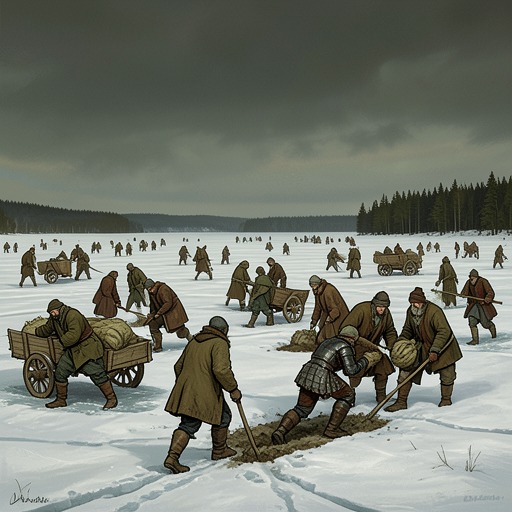
As the Rostov family prepares to leave [Moscow](entity:location-recall-location-moscow-b59c72aac896), Natasha insists that their carts be given to wounded soldiers rather than used for household goods. The decision converts private property into an act of practical compassion and reveals the people's war through ordinary sacrifice.
1 September 1812
Prince Andrei Travels with Rostovs
The wounded Prince Andrei is placed in a Rostov carriage as the family leaves [Moscow](entity:location-recall-location-moscow-b59c72aac896). Natasha learns of his presence only after the evacuation begins, and the discovery reopens the bond between them at the edge of death.
2 September 1812
Moscow Is Abandoned
The Russian army and inhabitants leave [Moscow](entity:location-recall-location-moscow-b59c72aac896) while Napoleon waits for a deputation that never comes. The empty city denies him the political triumph he imagined and turns occupation into a hollow possession.
2 September 1812
Pierre Rescues a Child
While attempting to move through burning [Moscow](entity:location-recall-location-moscow-b59c72aac896), Pierre rescues a child from a fire and protects an Armenian woman from French marauders. He is arrested as an incendiary, but the acts mark his passage from private fantasy to genuine moral action.
2 September 1812
Rostopchin Kills Vereshchagin
[Count Fyodor Rostopchin](entity:character-recall-character-count-fyodor-rostop-dcb2db4f258d) hands Vereshchagin to a mob and orders the soldiers to cut him down. The killing exposes the moral collapse produced when public authority turns its fear and vanity into a supposed defense of public order.
2-6 September 1812
Fire of Moscow
[Moscow](entity:location-recall-location-moscow-b59c72aac896) burns after its inhabitants abandon the city and French troops disperse through its wooden houses. The destruction cannot be assigned to a single arsonist or official; it emerges from evacuation, military occupation, looting, campfires, and the city's own combustible condition.
September 1812
Napoleon Occupies Moscow
Napoleon enters [Moscow](entity:location-recall-location-moscow-b59c72aac896) expecting submission and negotiation, but finds an empty, burning capital. His orders for administration, trade, religion, and discipline fail because the city has ceased to function as the political object he imagined possessing.
3-8 September 1812
Pierre Is Captured
Pierre is arrested during the fire and accused of incendiarism. After a series of formal interrogations that ignore his real motives, he is condemned with other prisoners and forced to witness executions.
8 September 1812
Pierre Witnesses Executions
French soldiers execute Russian prisoners in a field outside [Moscow](entity:location-recall-location-moscow-b59c72aac896), including a young factory worker. Pierre's faith in moral order collapses as he sees both victims and executioners suffer under a force none of them fully controls.
September 1812
Pierre Meets Karataev
In captivity Pierre meets [Platon Karataev](entity:character-recall-character-platon-karataev-a2b23860a12b), whose simplicity, compassion, work, stories, and acceptance of suffering restore Pierre's sense that life contains meaning beyond status, ideology, or personal will. Karataev becomes for Pierre the living embodiment of Russian spiritual resilience.
October 1812
French Retreat Begins
After remaining in [Moscow](entity:location-recall-location-moscow-b59c72aac896) for weeks, Napoleon's army begins its retreat along the devastated [Smolensk](entity:location-recall-location-smolensk-cc4ae16d49c9) road. Loot, hunger, cold, and the collapse of discipline transform the [Grande Armée](entity:organization-recall-organization-grande-arm-e-17e00cf65204) from an invading force into a fleeing mob.
Autumn 1812
Russian Partisan War
Peasants, Cossacks, soldiers, and independent guerrilla bands attack isolated French detachments, seize transports, and destroy stragglers. The irregular conflict rejects conventional rules of war and turns the entire country into an active force against the invasion.
October 1812
Petya Joins the Partisans
[Petya Rostov](entity:character-recall-character-petya-rostov-7315a5297c2e) joins Denisov's guerrilla detachment and eagerly participates in reconnaissance despite orders to avoid danger. His youthful desire for heroic action places him on the path toward the death he imagines as glory.
21 October 1812
Petya Is Killed
During a dawn attack on a French convoy, Petya rides ahead of the assault and is killed by a bullet through the skull. Denisov's grief and Dolokhov's cold efficiency reveal the irreconcilable difference between youthful heroism and the brutal mechanics of partisan warfare.
October 1812
Pierre Is Liberated
Russian guerrillas rescue the remaining prisoners, including Pierre, from the retreating French. He learns that Karataev has been left behind and understands that his captivity has permanently transformed his view of freedom, suffering, and God.
18 October 1812
Battle of Tarutino
Russian troops attack [Murat](entity:character-recall-character-murat-dabdcd907024)'s exposed force near [Tarutino](entity:location-recall-location-tarutino-9de00faee8da), though the operation is confused and fails to achieve its elaborate strategic aims. Its real importance is that it marks the transition from Russian retreat to advance and reveals the French army's weakness.
24 October 1812
Battle of Malo-Yaroslavets
The French attempt to move toward the rich southern provinces but are checked at [Malo-Yaroslavets](entity:location-recall-location-malo-yaroslavets-49ac5e29961a). Napoleon is forced back onto the devastated [Smolensk](entity:location-recall-location-smolensk-cc4ae16d49c9) road, beginning the irreversible destruction of the invasion.
October-November 1812
French Retreat from Russia
The French army retreats through Vyazma, [Smolensk](entity:location-recall-location-smolensk-cc4ae16d49c9), and [Krasnoe](entity:location-recall-location-krasnoe-29d239a40698), disintegrating from hunger, cold, disease, pursuit, and internal disorder. The Russians suffer heavily from the same march but maintain the pressure necessary to drive the invaders from the country.
15-18 November 1812
Battle of Krasnoi
Russian forces attack the retreating French at Krasnoi and take thousands of prisoners, cannon, and standards. The victory confirms the destruction of the [Grande Armée](entity:organization-recall-organization-grande-arm-e-17e00cf65204), though rival commanders still complain that Napoleon himself was not captured.
26-29 November 1812
Berezina Crossing
The French cross the [Berezina River](entity:location-recall-location-berezina-river-b3fa42b861c8) amid broken bridges, panic, drowning, and abandonment. The crossing is catastrophic but not the sole cause of the army's destruction; it concentrates the disaster already produced by months of retreat and privation.
December 1812
Kutuzov's Mission Ends
Kutuzov reaches [Vilna](entity:location-recall-location-vilna-fb55f1eecab0) and resists extending the war beyond Russia. Alexander I and the court transfer authority toward a European campaign, while Kutuzov's national role is effectively complete and he dies soon afterward.
Late 1812-early 1813
Natasha and Mary Grieve
Natasha and Princess Marya mourn Prince Andrei and Petya in [Yaroslavl](entity:location-recall-location-yaroslavl-db8c62ddc48f). Their shared care for Countess Natalya and their refusal to treat grief as a social performance draw them into an intimate friendship that gradually restores their capacity for life.
Late 1812
Nikolai Meets Marya
[Nikolai Rostov](entity:character-recall-character-nikolai-rostov-951d69c879e8) encounters Princess Marya in [Voronezh](entity:location-recall-location-voronezh-72d7094073f5) after rescuing her at [Bogucharovo](entity:location-recall-location-bogucharovo-1d8c2419f4b3). His admiration for her spiritual depth conflicts with his promise to Sonya and with the financial needs of his family.
Late 1812
Sonya Frees Nikolai
Sonya writes to Nikolai releasing him from his promise, believing that his family needs the wealth of a marriage to Princess Marya. Her self-sacrifice opens the way for Nikolai's later marriage and completes the tragic arc of her unfulfilled love.
1813
Nikolai Marries Marya
Nikolai marries Princess Marya and settles at [Bald Hills](entity:location-recall-location-bald-hills-247d43316827) with his mother, Sonya, and their new family. He gradually restores the ruined finances through practical farming, while Marya brings a spiritual and intellectual life into the household.
1813
Pierre Marries Natasha
[Pierre Bezukhov](entity:character-recall-character-pierre-bezukhov-c5f31d9c4b4a) marries [Natasha Rostova](entity:character-recall-character-natasha-rostova-881ee187c6a6) after their mutual grief, spiritual transformation, and renewed intimacy. Their marriage becomes a disciplined family life in which Pierre's intellectual activity and Natasha's domestic devotion complement one another.
1813
The Rostov Estate Collapses
[Count Ilya Rostov](entity:character-recall-character-count-ilya-rostov-55026c3c72b9) dies after the destruction of the family's property and the death of Petya, leaving debts twice the value of the estate. Nikolai accepts the inheritance and its obligations, resigns from the army, and sacrifices his own prospects to support his mother and Sonya.
1814-1820
Nikolai Builds a New Life
Nikolai repays the family debts through austere civil service and successful estate management. He becomes a respected farmer who treats the peasant community as both the means and the end of his work, creating stability without embracing fashionable theories.
1820
Pierre Enters Political Action
Pierre returns from Petersburg with plans for a society of independent, virtuous men who will resist corruption and protect the public good. His proposal alarms Nikolai, who insists that loyalty to the government and family duty come first.
5 December 1820
Young Nicholas Hears Pierre
Young Nicholas Bolkonsky secretly listens to Pierre and Nikolai debate politics and imagines a future in which he will act heroically like his father. His dream closes the novel by linking private memory, inherited ideals, and the uncertain political future.